
Buying a Medical Cart in Canada: What to Check First
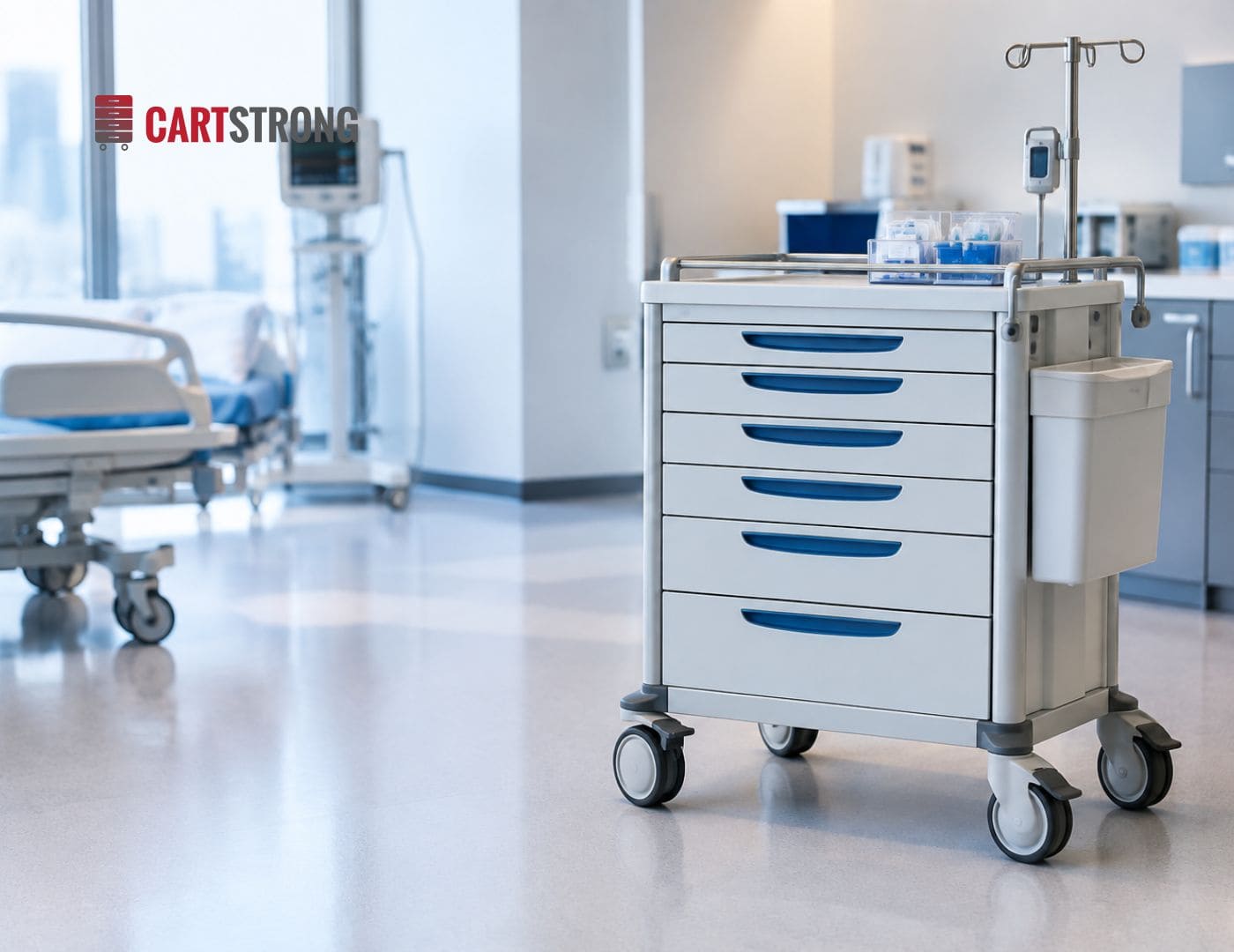
Buying a medical cart in Canada is rarely a one-person decision. Nursing needs a layout that works at the bedside, IPAC needs surfaces that hold up to disinfection, and procurement needs equipment that lasts. The short answer is to check five things first: cleanability, workflow fit, build quality, room fit, and supplier support.
Key Takeaways
- Start with infection control, because materials decide how well a cart cleans and how long it lasts.
- Match the cart to your unit's workflow, not to a generic catalogue model.
- Inspect casters, drawer slides, and warranty terms before you compare prices.
- Confirm the cart fits your room dimensions and design plan.
- Choose medical cart suppliers who can customize, support, and stand behind the product.
What Should You Check First When Buying a Medical Cart?
A medical cart is mobile, cleanable storage that brings supplies and equipment to the point of care. Because it works in patient care areas around the clock, it needs to meet a higher standard than a general utility cart.
Before comparing quotes, confirm that the cart:
- Uses non-porous materials that tolerate hospital disinfectants.
- Has a storage layout built around your unit's daily tasks.
- Stays stable, secure, and closed while moving.
- Fits your room, alcove, or bedspace.
- Comes with a clear warranty and responsive support.
Each of these checks is covered in more detail below.
Does the Cart Meet Canadian Infection Control Expectations?
Infection control is usually the first gate for medical carts in Canada. In Ontario, PIDAC guidance recommends that care-area surfaces be cleanable, easy to maintain and repair, resistant to microbial growth, nonporous, and seamless. It also states that damaged equipment that can't be cleaned effectively must be repaired, replaced, or removed from clinical areas (PIDAC, Public Health Ontario).
In practice, that means material choice matters as much as layout. Here is how the common options compare:
| Material | Best Fit | What to Know |
|---|---|---|
| Health-grade laminate | Patient rooms, birthing rooms | Durable and cost-effective, with warm wood-look finishes |
| Thermofoil / Kydex | High-touch clinical areas | Smooth, wrapped surfaces with fewer seams to clean |
| Antimicrobial | Units with strict IPAC priorities | Biosafe® additive protects the surface; it supports cleaning but does not replace it |
| Stainless steel | High-demand, heavy-use areas | Non-porous and highly resistant to wear |
Ask suppliers directly whether their materials have been tested against healthcare germicidal solutions. Cartstrong Medical Inc. tests its carts this way, which gives IPAC teams a clear basis for approval.
Is the Cart Built for Your Unit's Workflow?
A cart that suits one unit can slow down another. The right configuration depends on what staff reach for, how often they reach for it, and how quickly they need it.
What Do Labour and Delivery Units Need?
Birthing rooms rely on several pieces working together. Delivery carts keep birth supplies at the bedside, fetal monitor carts hold monitoring equipment steady, and hospital bassinets give newborns a safe, visible space beside the parent.
Look for options such as chart holders, slide-out writing surfaces, and polycarbonate tubs. Matching finishes across all three pieces also helps the room feel calmer and less clinical for families.
What Do NICU Teams Need?
NICU bedspaces are tight, and clutter creates risk. NICU carts should include drawer dividers for small supplies, locking casters for stability, and a compact footprint that fits the space.
What About Emergency and Supply Carts?
Emergency carts need a clear, consistent layout so any clinician can find supplies fast during a code. Supply carts should make stocking and restocking simple, with secure storage where it's needed.
How Do You Evaluate Build Quality and Durability?
Price only tells part of the story. A cart that wears out in a few years often costs more over time than one built for continuous use.
During evaluation, check for:
- Drawer slides: heavy-duty, soft-close slides that stay shut during transport.
- Casters: a mix of locking and non-locking wheels, such as two of each, so the cart moves easily and stays put at the bedside.
- Protection: a bumper strip around the base to protect walls, door frames, and the cart itself.
- Security: electronic or key lock options for controlled items.
- Warranty: clear coverage terms. Cartstrong carts come with a standard 5-year warranty.
If possible, trial a sample cart on the unit before committing. Front-line staff often spot problems that don't show up on a spec sheet.
Will the Cart Fit Your Room and Design Plan?
Standard dimensions don't always suit alcoves, millwork, or older rooms. During renovations and new builds, equipment planning should start early, alongside room design.
In Canada, CSA Z8000:24, the national standard for health care facilities, sets planning, design, and construction requirements for new facilities and existing facilities undergoing renovation (CSA Group). Capital planning teams often use it to structure furniture and equipment decisions.
Custom carts address fit directly. They can be built to specific dimensions, drawer and door configurations, and work surfaces, with finishes that match the rest of the unit.
What Should You Ask Medical Cart Suppliers?
Many Canadian hospitals buy through group purchasing organizations or formal tender processes. Whatever the route, the same questions help separate strong medical cart suppliers from the rest:
- Do you design and build the carts, or only resell them?
- Can you customize dimensions, layouts, and finishes?
- What warranty comes standard, and what does it cover?
- How do you handle shipping, delivery, and after-sale support?
- Can you supply matching pieces across bassinets, carts, and bedside cabinets?
Cartstrong Medical Inc. designs and builds its carts in Concord, Ontario, and serves hospitals across Canada and the U.S. Working directly with the manufacturer means your team can shape the design around real clinical needs.
Choosing a Medical Cart in Canada With Confidence
The right medical cart supports infection control, fits the workflow, and holds up to years of daily use. When nursing, IPAC, and procurement review these checks together, the unit gets equipment that works on day one and keeps working.
If you're comparing options for a medical cart in Canada, speak with the Cartstrong team about standard and custom configurations for your unit, or call 1-888-402-CART (2278).