
Infection Control Requirements for Medical Carts and Hospital Furniture in Canada
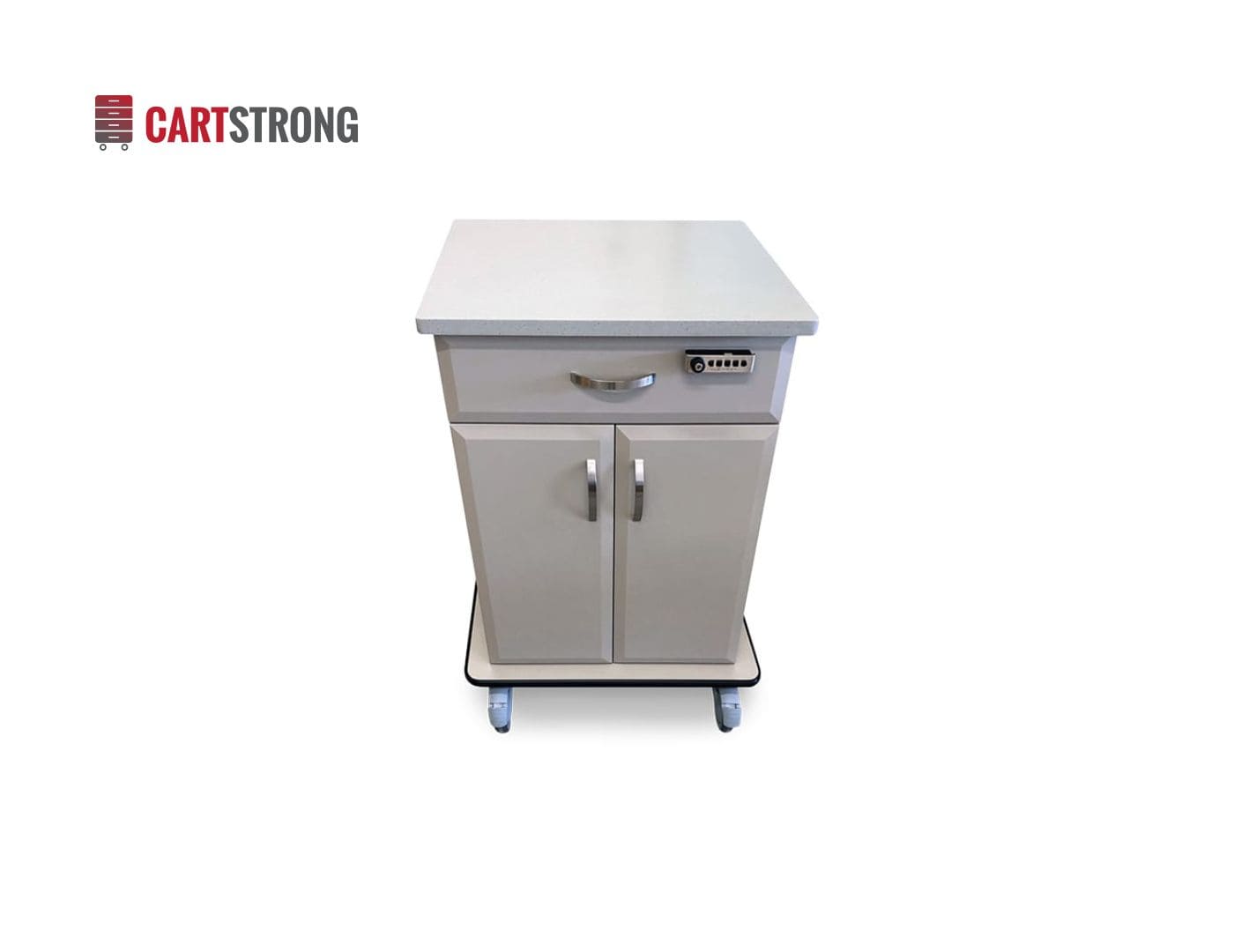
Medical carts and hospital furniture are touched dozens of times a shift, then wiped down again and again. That makes medical cart infection control a materials question as much as a cleaning question. In Canada, IPAC guidance expects care-area equipment to be cleanable, nonporous, seamless where possible, and compatible with hospital disinfectants. Equipment that can no longer be cleaned properly should be repaired, replaced or removed. This guide explains what that means for carts, cabinets and bedside furniture, and what to check before you buy.
Key Takeaways
- Canadian IPAC guidance focuses on cleanability: nonporous, seamless surfaces that tolerate hospital disinfectants.
- Damaged surfaces that can't be cleaned effectively should be repaired, replaced or removed from care areas.
- Material choice (laminate, antimicrobial or stainless steel) shapes how well a cart holds up over time.
- Antimicrobial surfaces protect the product itself but never replace routine cleaning.
- IPAC, nursing and procurement should review materials together before purchase.
What Are the Infection Control Requirements for Medical Carts in Canada?
There is no single national rule that lists approved cart materials. Instead, Canadian hospitals follow provincial IPAC best practices, facility policies and national design standards. Ontario's PIDAC guidance is one of the most widely referenced examples.
PIDAC's best practices for environmental cleaning recommend that surfaces, finishes, furnishings and equipment in care areas be:
- Cleanable
- Easy to maintain and repair
- Resistant to microbial growth
- Nonporous (smooth)
- Seamless
The same guidance states that furnishings and equipment should withstand repeated cleaning and be compatible with hospital detergents, cleaners and disinfectants. It also says that damaged items that can't be cleaned effectively must be repaired, replaced or removed from clinical areas (PIDAC, Public Health Ontario).
How Do These Requirements Apply to Hospital Furniture?
The same principles apply to all hospital furniture in care areas, not just carts. That includes bedside cabinets, overbed tables, bassinets and delivery carts. Anything patients or staff touch regularly needs surfaces that clean easily and stay intact.
Do Standards Cover New Builds and Renovations?
Yes. CSA Z8000:24, the national standard for Canadian health care facilities, sets planning, design and construction requirements for new facilities and renovations, including updated infection prevention and control requirements (CSA Group). Capital planning teams often use it alongside provincial IPAC guidance when selecting furniture and equipment.
Which Medical Cart Materials Support Infection Control?
Material choice determines how well a cart holds up to daily disinfection. Each option has strengths, so the right choice depends on the unit and how the cart is used.
| Material | Infection Control Strengths | Best Suited For |
|---|---|---|
| Health-grade laminate | Smooth surface built to withstand regular cleaning with disinfectants | Patient rooms, birthing rooms, general units |
| Thermofoil / Kydex | Wrapped surfaces with fewer exposed seams | High-touch areas |
| Antimicrobial (Biosafe® additive) | Additive bonded throughout the material protects the surface against stain- and odour-causing bacteria, algae and fungi | Units with stricter IPAC priorities |
| Stainless steel | Nonporous and highly durable | High-demand areas with heavy cleaning cycles |
Do Antimicrobial Carts Replace Cleaning?
No. Antimicrobial surfaces protect the product itself from bacterial degradation, staining and odour. They do not replace routine cleaning and disinfection, and they shouldn't change your unit's cleaning schedule.
Cartstrong's antimicrobial carts use an additive bonded at the molecular level, so it won't leach out over the life of the product. Standard cleaning and disinfecting procedures still apply.
When Does a Stainless Steel Medical Cart Make Sense?
A stainless steel medical cart suits areas where carts face heavy cleaning cycles and constant use. Its nonporous surface holds up well to repeated disinfection. Cartstrong offers stainless steel carts, including stainless bassinets, delivery carts and fetal monitor carts.
What Design Features Help With Infection Control?
Materials are only part of the picture. Design details decide whether a cart is actually easy to clean every day.
- Smooth tops: spillguard and solid surface tops contain spills and wipe down easily.
- Secure drawers: soft-close drawer slides keep drawers closed in transit, so contents stay protected.
- Drawer dividers: keep supplies separated and make drawer interiors easier to wipe out.
- Stainless steel handles: durable, cleanable touchpoints.
- Bumper strip: protects the cart base from chips and dents that can make surfaces harder to clean.
- Germicide testing: confirms the materials hold up to healthcare germicidal solutions.
Every Cartstrong cart is built for the 24/7/365 demands of healthcare and tested to withstand healthcare germicidal solutions.
What Is an Isolation Cart?
An isolation cart is a cart placed outside an isolation room that holds the personal protective equipment (PPE) staff need before entering. It keeps gowns, gloves, masks and related supplies organized at the point of use.
Because isolation carts sit at the boundary of a precautions room, cleanable surfaces matter even more. Many units configure a supply cart or custom cart for this role, using drawer dividers to separate PPE by type and size.
How Should Your Team Evaluate Carts for Infection Control?
Infection control decisions work best when IPAC, nursing and procurement review equipment together. Before purchase, ask suppliers:
- Which materials are available, and how do they hold up to your facility's disinfectants?
- Have the materials been tested against healthcare germicidal solutions?
- How are seams and edges finished?
- What claims does the supplier make about antimicrobial options, and are those claims limited to the product surface?
- What warranty covers the cart if surfaces fail early?
Cartstrong designs and builds medical carts and hospital furniture in Concord, Ontario. Its carts are available in laminate, thermofoil, Kydex, antimicrobial and stainless steel, and come with a standard 5-year warranty. Product lines include bassinets, delivery carts, emergency carts, NICU carts and bedside cabinets.
Building Medical Cart Infection Control Into Every Purchase
Strong medical cart infection control starts before the cart reaches the unit. Choose nonporous, cleanable materials, look for design details that make daily disinfection easier, and replace damaged equipment promptly. When IPAC is involved from the start, the hospital furniture you buy supports your cleaning program instead of working against it.
To review materials and configurations for your facility, speak with the Cartstrong team or call 1-888-402-CART (2278).