
What is a Crash Cart?
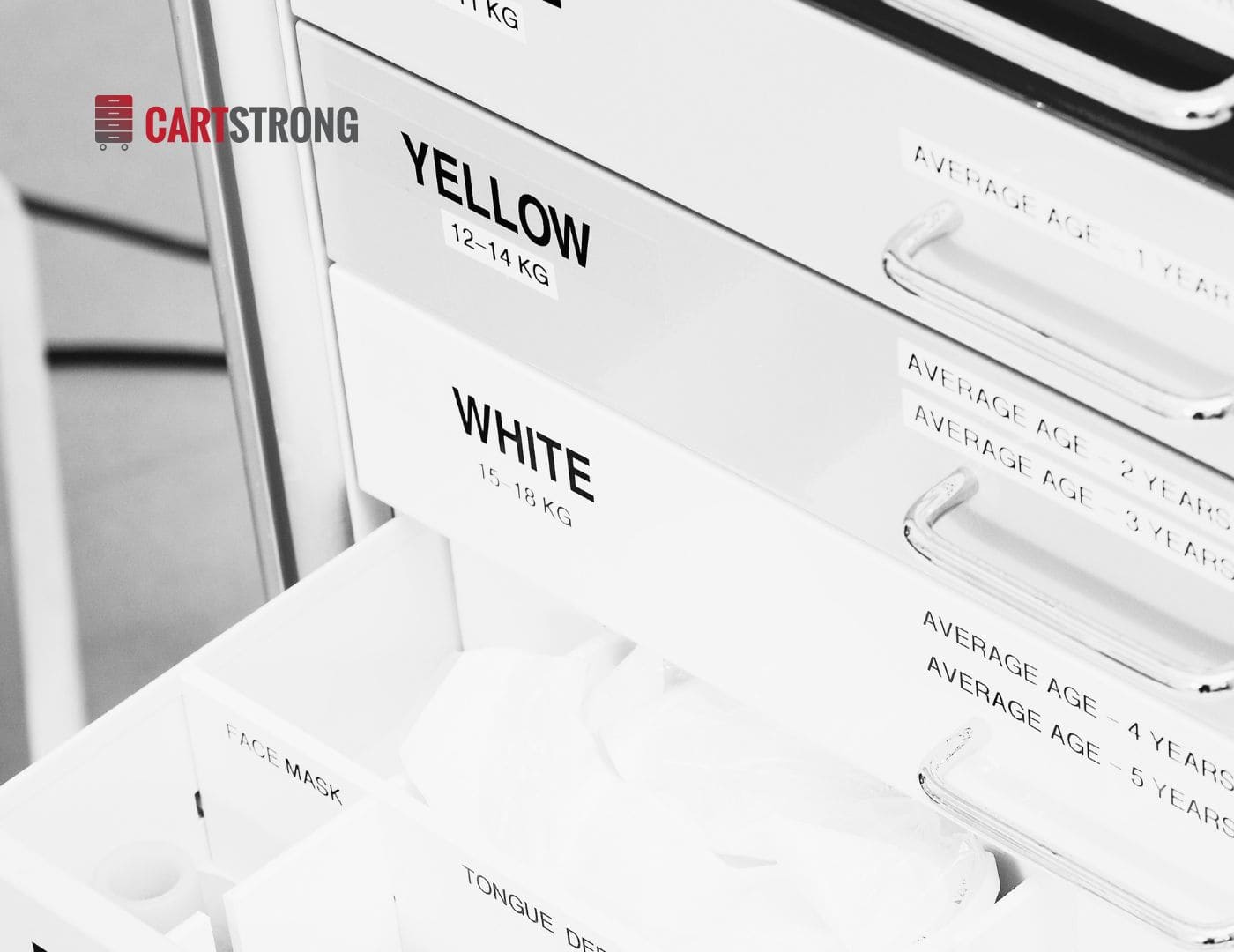
When a patient arrests, the team has seconds to find the right equipment. So what is a crash cart? A crash cart, also called a code cart or emergency cart, is a mobile, lockable cart that keeps resuscitation equipment, airway supplies and emergency medications organized in one place, so clinicians can bring everything to the bedside at once. This guide explains how crash carts work, how their drawers are typically organized, what a crash cart checklist covers and what to look for in the cart itself.
Key Takeaways
- A crash cart is a mobile cart that stores resuscitation equipment and emergency medications for codes.
- A consistent drawer layout helps teams find items faster and reduces the chance of errors.
- Crash cart checklists cover routine checks, restocking after every use and expiry date reviews.
- Cart design matters: stability, smooth drawers, colour-coding and secure locking all affect code response.
- Facility policy, not the cart manufacturer, sets the exact contents and check schedule.
What Is a Crash Cart Used For?
A crash cart is used during cardiac arrests, respiratory emergencies and other life-threatening events. Instead of gathering supplies from several locations, the responding team brings one cart that holds everything they need.
Speed is the whole point. A systematic review of emergency department crash carts notes that every minute of delay in cardiac arrest resuscitation can reduce successful outcomes by 7% to 10%. The authors stress that crash carts should be carefully equipped, organized and maintained (World Journal of Emergency Medicine).
Where Are Crash Carts Kept?
Most hospitals place crash carts in emergency departments, intensive care units, operating areas, procedure rooms and on inpatient floors. Many units also keep one near labour and delivery or the NICU. Each cart should sit in a consistent, visible spot that every staff member knows.
What's the Difference Between a Crash Cart and a Supply Cart?
A crash cart is reserved for emergencies, stays sealed between uses and follows a strict check routine. A supply cart, by contrast, holds everyday clinical stock that staff open and restock throughout the shift. Mixing the two roles often leads to missing items when a code is called.
How Are Crash Cart Drawers Organized?
Crash cart drawers are usually organized from top to bottom by urgency and item size. Medications and small, high-priority items go in the shallow top drawers, while airway equipment and larger supplies go in the deeper drawers below.
The same systematic review recommends a consistent approach to organizing medication drawers to reduce medication errors and retrieval time. It also suggests attaching a visible content list with expiry dates to the cart.
A typical layout looks like this. Your facility's protocol decides the final contents.
| Location | Typical Contents |
|---|---|
| Top of cart | Defibrillator and monitor; content list with expiry dates |
| Top drawers (shallow) | Emergency medications, separated with dividers and clearly labelled |
| Middle drawers | IV access supplies, syringes and related items |
| Lower drawers (deeper) | Airway and breathing equipment |
| Bottom drawer (deepest) | Larger procedure kits and bulky supplies |
| Side or back of cart | Backboard, oxygen and other externally mounted items |
Why Do Drawer Sizes and Colours Matter?
Drawer depth decides what fits where. Mixing shallow and deep drawers lets you store small vials and bulky airway kits on the same cart without wasted space.
Colour-coding helps too. When each drawer front uses a consistent colour, staff can find the right drawer at a glance, even on an unfamiliar unit.
What Should a Crash Cart Checklist Include?
A crash cart checklist confirms that the cart is complete, in date and ready for the next code. Check frequency and contents are set by facility policy, but most checklists follow a similar structure.
| When | What to Check |
|---|---|
| Routine (per facility policy, often daily or each shift) | Lock or seal intact; defibrillator check; externally mounted items present |
| After every use | Restock the entire cart, reseal it and document the restock |
| Monthly | Review medication expiry dates and replace items as needed |
| Ongoing | Inspect the cart itself: drawers, casters, locks and surfaces |
The cart itself belongs on the checklist too. Drawers that stick, casters that won't lock or a damaged top can slow the team down just as much as a missing item.
What Should You Look for in a Crash Cart?
The contents get most of the attention, but the cart's design shapes every code. When evaluating a crash cart, look at five things.
Stability and Mobility
A crash cart moves fast through crowded corridors. A wide base, ergonomic push handles and locking casters help it travel quickly and stay put at the bedside.
Drawer Access
Full-extension drawer glides let staff see the entire drawer at once. Drawer dividers keep small items from shifting during transport.
Configurable Drawer Depths
Every unit stocks its cart differently. Look for a cart that offers several drawer depths so the layout matches your protocol.
Colour and Labelling
Coloured drawer fronts support quick visual recognition and make it easier to standardize carts across departments.
Security and Cleanability
Crash carts need to stay secured between codes, and many facilities use tamper-evident seals for this. The cart also needs surfaces that hold up to frequent disinfection, especially after a code.
How Cartstrong Builds Emergency Carts
Cartstrong designs and builds emergency carts in Concord, Ontario, for hospitals and healthcare facilities. Each cart is designed around the features above:
- Wide platform stabilizer base and ergonomic push handles
- 5″ casters, two locking and two non-locking
- Full-extension ball-bearing drawer glides
- Five 6-inch drawers and one 9-inch drawer as standard, with 3-inch and 12-inch drawers also available
- Sixteen drawer-front colours and three exterior colours
- Removable ABS plastic molded top
- Drawer dividers, plus electronic and key lock options
- Latex-free, health-grade laminate built to withstand regular disinfection
The standard emergency cart measures 29″ W × 24.5″ D × 45″ H, and you can choose drawers, doors or both. For units with stricter infection prevention priorities, antimicrobial and stainless steel options are available. If a standard size doesn't fit your space, custom carts can be built to your dimensions.
Choosing the Right Crash Cart for Your Unit
So, what is a crash cart in practice? It's a fast-moving, well-organized resuscitation station that only works if its layout, checks and construction are all dependable. Standardized drawers, a clear checklist and a cart built for frequent use give your team one less thing to think about during a code.
To configure emergency carts for your facility, speak with the Cartstrong team or call 1-888-402-CART (2278). You can also explore our full range of medical carts on wheels.