
Crash Cart Checklist: Daily Checks, Restocking and Layout
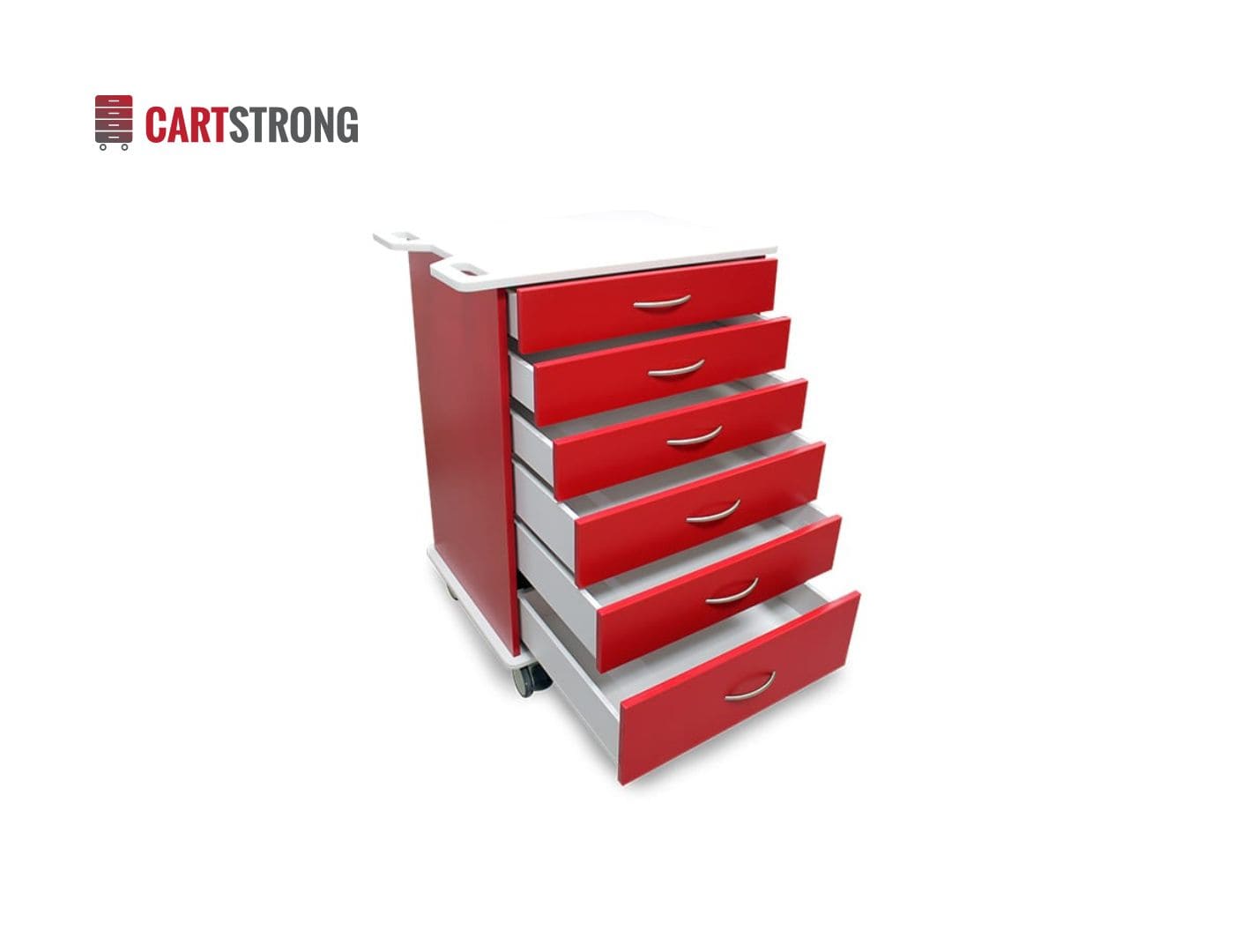
A crash cart is only as reliable as the routine behind it. Most problems during a code don't come from the cart itself but from a missed check, an item that wasn't restocked or a drawer layout that differs from the unit next door. A clear crash cart checklist prevents all three. It should cover routine checks, restocking after every code, a monthly expiry review and the condition of the cart itself. This guide breaks down each part so your team can build or update its own checklist.
Key Takeaways
- A crash cart checklist should cover routine checks, post-code restocking, expiry reviews and cart condition.
- Your facility policy sets the exact contents and check frequency.
- Restock and reseal the entire cart immediately after every code.
- A consistent drawer layout makes every check faster and more accurate.
- Assign each check to a specific role and document it every time.
New to the topic? Start with our overview: What Is a Crash Cart?
What Should a Crash Cart Checklist Include?
A complete crash cart checklist has four parts, each on its own schedule. Your facility policy decides the exact frequency, but most hospitals follow this structure.
| Checklist Section | Typical Frequency | Usually Owned By |
|---|---|---|
| Routine readiness check | Set by facility policy (often daily or each shift) | Nursing |
| Post-code restock | Immediately after every use | Nursing, with pharmacy for medications |
| Expiry review | Monthly | Pharmacy |
| Cart condition check | Ongoing, plus during audits | Nursing, with facilities or biomedical staff |
A systematic review of emergency department crash carts recommends that a detailed printed checklist with complete contents and clear expiry dates accompany each cart. It also recommends restocking the entire cart immediately after each use and having pharmacy check medication expiry dates monthly (World Journal of Emergency Medicine).
Routine Readiness Checklist
The routine check confirms the cart is secured and ready without opening every drawer. Use these items as a starting point:
- ☐ Seal or lock is intact
- ☐ Defibrillator passes its functional check per your facility protocol
- ☐ Externally mounted items are present (for example, backboard)
- ☐ Content list and expiry dates are posted and readable
- ☐ Cart is in its designated location and unobstructed
- ☐ Check is signed and dated
Post-Code Restocking Checklist
Crash cart restocking is the most important step in the routine. A cart that isn't restocked right away puts the next patient at risk.
- Remove the cart from service and swap in a backup if your unit has one.
- Replace every item used, following the posted content list.
- Check expiry dates on everything you add.
- Wipe down the cart, especially high-touch surfaces like handles and the top.
- Reseal or relock the cart.
- Document the restock and return the cart to its location.
Monthly Expiry Review Checklist
- ☐ All medication expiry dates checked
- ☐ Items expiring before the next review replaced
- ☐ Content list updated to reflect replacements
- ☐ Cart resealed and the review documented
Cart Condition Checklist
The cart itself belongs on the checklist too. A sticking drawer or a caster that won't lock can slow a code just as much as a missing item.
- ☐ Drawers open fully and close smoothly
- ☐ Casters roll freely and the locking casters hold
- ☐ Locks work correctly
- ☐ Top and surfaces are intact, with no cracks or chips that make cleaning harder
- ☐ Drawer dividers and labels are in place
How Does Drawer Layout Make the Checklist Easier?
Checks go faster when every cart uses the same crash cart drawer layout. The same review recommends a consistent approach to organizing medication drawers to reduce errors and retrieval time, along with a contents list on each drawer front.
A common layout, from top to bottom:
- Top surface: defibrillator and monitor
- Shallow top drawers: medications, separated with dividers and clearly labelled
- Middle drawers: IV access and related supplies
- Deeper drawers: airway and breathing equipment
- Deepest drawer: larger procedure kits
Your facility's protocol and pharmacy decide the exact crash cart contents. Keeping the zones identical across units means staff can check, restock and respond on any floor without relearning the cart.
What Cart Features Make Checks Easier?
The right cart supports your checklist instead of working against it. Cartstrong designs and builds emergency carts in Concord, Ontario, with features that make routine checks faster:
- Full-extension ball-bearing drawer glides, so the whole drawer is visible at once
- Drawer dividers that keep zones intact during transport
- Sixteen drawer-front colours to support one standard layout across units
- Five 6-inch drawers and one 9-inch drawer as standard, with 3-inch and 12-inch drawers available
- Electronic or key locks for security between uses
- A wide platform stabilizer base and 5″ casters (two locking)
- Latex-free, health-grade laminate built for regular disinfection
For units with stricter IPAC needs, antimicrobial and stainless steel options are available. When a standard size doesn't fit, custom carts can be built to your dimensions while keeping the same drawer logic.
Putting Your Crash Cart Checklist Into Practice
A strong crash cart checklist covers routine checks, immediate restocking, monthly expiry reviews and cart condition, with each section assigned to a clear owner. Pair it with a consistent drawer layout and a well-built cart, and your team can trust every cart to be ready when a code is called.
To configure emergency carts that support your unit's checking routine, speak with the Cartstrong team or call 1-888-402-CART (2278).