
What Is a Medical Cart? Types, Uses and How to Specify One
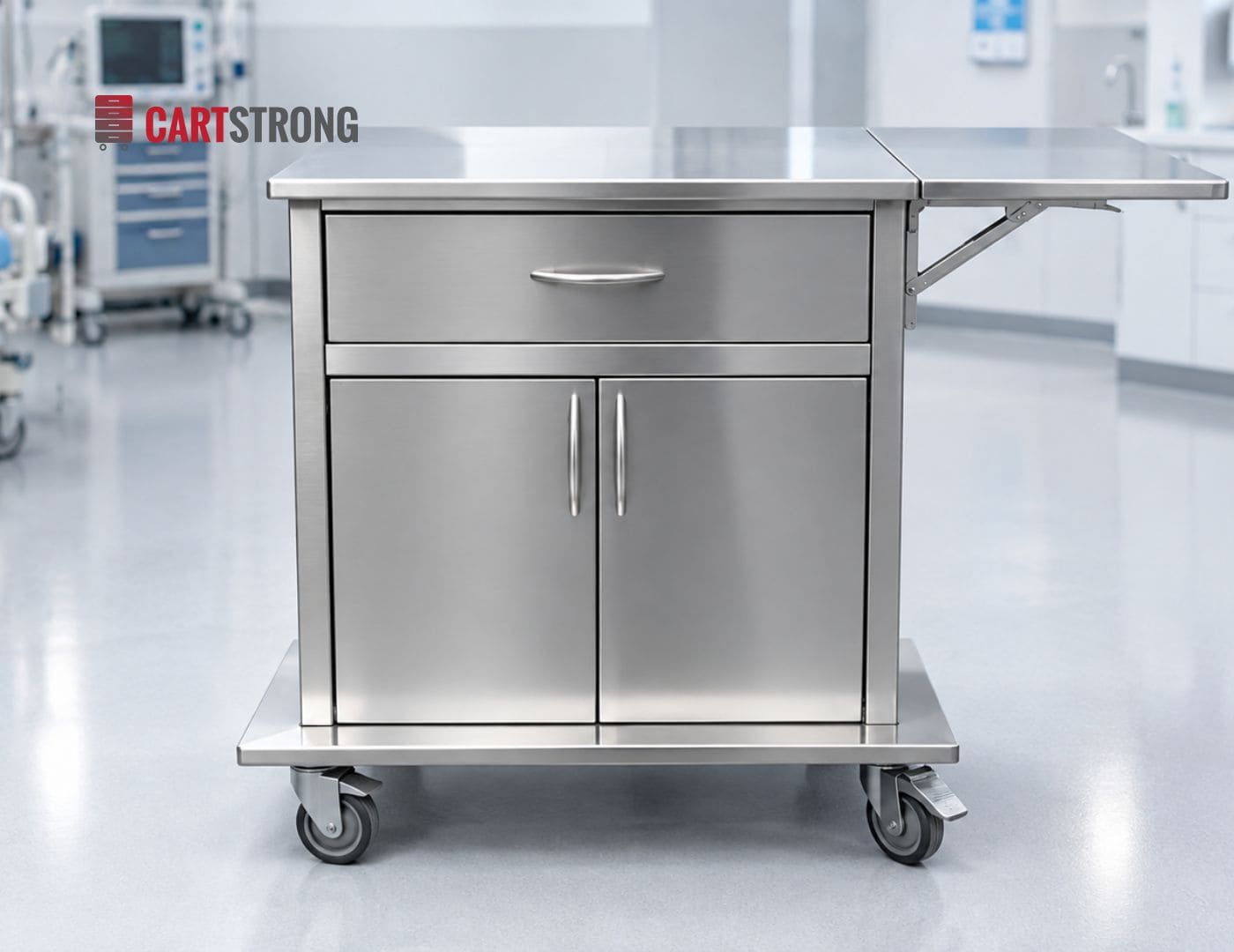
Nurses shouldn't have to leave the bedside to find a syringe, a chart, or a clean blanket. A medical cart solves that problem. It is a mobile, cleanable storage unit that keeps supplies, equipment, and documentation within reach at the point of care.
Key Takeaways
- A medical cart is mobile, disinfectant-safe storage built for patient care areas.
- Hospitals use unit-specific carts for labour and delivery, the NICU, emergency response, and general supply.
- Materials determine how well a cart cleans and how long it lasts.
- A strong specification balances workflow, infection control, and total cost of ownership.
What Is a Medical Cart?
A medical cart is clinical equipment designed to store, organize, and move supplies around a healthcare facility. It looks similar to a utility cart but is built to a higher standard, because it works in patient care areas every hour of every day.
A well-built hospital cart should:
- Withstand continuous 24/7 use without loosening or wearing out early.
- Hold up to repeated cleaning with hospital-grade disinfectants.
- Keep drawers secure while it moves between rooms.
- Lock firmly in place at the bedside.
- Help staff find supplies quickly, especially in urgent moments.
Cartstrong Medical Inc. designs and builds medical carts in Concord, Ontario, for hospitals across Canada and the U.S. Each cart is designed around the demands of busy clinical units.
What Are the Main Types of Medical Carts?
Every unit has its own rhythm, so most hospitals use several cart types rather than one general model.
| Cart Type | Where It's Used | Primary Purpose |
|---|---|---|
| Hospital bassinets | Labour & delivery, mother-baby | Safe newborn care with built-in storage |
| Delivery carts | Labour & delivery | Birth supplies at the bedside |
| Fetal monitor carts | Labour & delivery, antepartum | Stable, mobile support for monitors |
| NICU carts | Neonatal intensive care | Organized supplies near bedspaces |
| Emergency carts | Acute care units | Fast access during codes |
| Supply carts | Units hospital-wide | Stocking and restocking |
| Bedside cabinets | Patient rooms | Personal and clinical storage |
How Do Medical Carts Work Together in a Birthing Room?
In a labour and delivery room, three carts often work as one system:
- The delivery cart holds instruments and supplies for the birth.
- The fetal monitor cart keeps monitoring equipment steady and cords organized.
- The bassinet gives the newborn a safe, visible space beside the parent.
When these pieces share the same finish and layout, the room feels calmer for families. It also gives nurses a consistent workflow, because supplies sit in the same place from room to room.
How Do You Specify a Medical Cart?
Specifying a medical cart means matching its materials, storage, mobility, and size to how your team actually works. These four questions cover the decisions that matter most.
Which Material Is Right for Your Unit?
In Ontario, PIDAC guidance recommends that surfaces in care areas be cleanable, nonporous, seamless, and resistant to microbial growth. It also advises repairing, replacing, or removing damaged items that can no longer be cleaned properly.
Common material options include:
- Health-grade laminate: durable, cost-effective, and available in warm, wood-look finishes.
- Thermofoil and Kydex: smooth, wrapped surfaces with fewer seams to clean.
- Antimicrobial: a Biosafe® additive is bonded throughout the material to protect the surface against stain- and odour-causing bacteria and fungi. It supports cleaning protocols but does not replace them.
- Stainless steel: non-porous and highly durable, well suited to high-demand areas.
What Storage Layout Does Your Team Need?
Start with what staff reach for most, and how fast they need it. Helpful options include:
- Drawer and door combinations
- Drawer dividers for small supplies
- Chart holders and slide-out writing surfaces
- Pass-thru drawers and spillguard tops
- Electronic or key locks for secure items
Which Mobility and Safety Features Matter Most?
A cart that rolls smoothly but won't stay in place creates risk at the bedside. Look for:
- Casters with two locking wheels and two non-locking wheels
- Heavy-duty, soft-close drawer slides that stay shut during transport
- A bumper strip around the base to protect walls and door frames
- Materials tested against healthcare germicidal solutions
Will a Standard Cart Fit Your Space?
Standard sizes don't always fit alcoves, millwork, or tight NICU bedspaces. Custom carts can be built to specific dimensions, drawer configurations, and work surfaces. This flexibility is especially valuable during renovations and new builds.
Who Should Be Involved in the Purchase?
The best medical cart decisions are shared:
- Nursing confirms that the layout supports daily workflow.
- IPAC approves the materials and finishes.
- Procurement weighs the total cost of ownership, including Cartstrong's standard 5-year warranty and a longer service life that reduces how often carts need replacing.
When all three groups agree early, units get equipment that works on day one and lasts for years.
Choosing the Right Medical Cart for Your Unit
The right medical cart supports infection control, speeds up bedside care, and holds up under constant use. Start with your unit's workflow, then match materials, layout, mobility, and dimensions to it.
Planning a unit refresh or new build? Speak with the Cartstrong team about standard and custom cart configurations, or call 1-888-402-CART (2278).